
GLP-1 Medications in San Diego: Semaglutide, Tirzepatide, and Retatrutide Explained
GLP-1 medications in San Diego have become one of the most requested topics at Allurant Medical’s physician-directed weight loss program. Patients ask about semaglutide weight loss, tirzepatide weight loss, and the newest option, retatrutide weight loss, almost every day. Medical weight loss in San Diego looks very different than it did five years ago, because these drugs work in ways that older medications simply could not match. Dr. Kat Khorrami, MD, reviews every patient’s history before prescribing, so you get a plan built around your biology, not a one-size-fits-all protocol.
Brand names add to the confusion. Ozempic and Wegovy both contain semaglutide, yet they carry different FDA approvals. Zepbound and Mounjaro both contain tirzepatide, yet they serve different clinical purposes. Retatrutide is the newest molecule and sits in a class by itself. This article breaks down each drug, compares them honestly, and explains what physician supervision means for your safety and your results. As GLP-1 medications in San Diego become more widely prescribed, knowing the differences between each option gives you the confidence to have a real conversation with your provider.
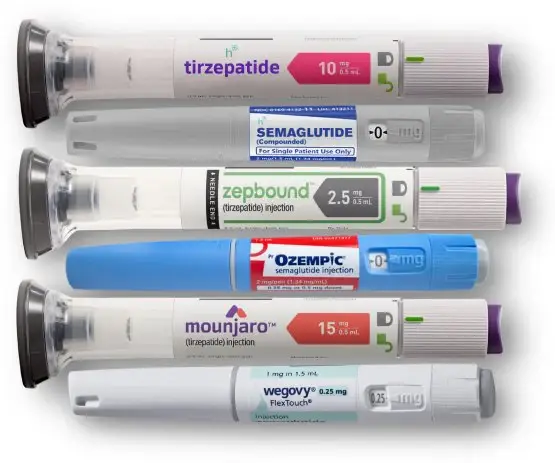
What Are GLP-1 Medications and How Do They Work?
GLP-1 stands for glucagon-like peptide-1, a hormone your gut releases after you eat. These medications mimic that hormone, telling your brain you are full, slowing how fast your stomach empties, and lowering the blood sugar spike that follows a meal. Because the brain gets a strong satiety signal, most patients eat less without feeling deprived.
Older weight loss drugs worked mainly by stimulating the nervous system. GLP-1 medications work through hormone pathways, which is why their side effect profile looks so different. Clinical trials published in the New England Journal of Medicine showed average body weight reductions of 15 to 20 percent over 68 weeks with semaglutide, results that no previous non-surgical weight loss drug had achieved.
Physician supervision matters here for a specific reason. Dosing these medications too quickly causes nausea, vomiting, and in rare cases, more serious complications. Dr. Kat Khorrami titrates each dose based on how your body responds, not on a fixed calendar. That level of individual attention is what makes medical weight loss in San Diego through Allurant Medical different from a telehealth prescription sent to your doorstep. Medical weight loss in San Diego with proper oversight also means your thyroid, kidney, and liver function get checked before and during treatment, not just at the start.
Semaglutide Weight Loss: Ozempic vs. Wegovy
Semaglutide is a single molecule with two brand names that carry different FDA approvals. Understanding the difference protects you from the confusion that spreads on social media.
Ozempic
Ozempic received FDA approval for type 2 diabetes management. Its approved doses top out at 2 mg weekly. Many prescribers use it off-label for semaglutide weight loss, and it works, but the label is diabetes-focused. Insurance coverage for weight loss through Ozempic remains inconsistent as a result.
Wegovy
Wegovy contains the same semaglutide molecule, yet it carries a dedicated FDA approval for chronic weight management in adults with a BMI of 30 or higher, or 27 or higher with a weight-related condition. The approved dose goes up to 2.4 mg weekly, higher than Ozempic’s ceiling. Wegovy trials showed average weight loss near 15 percent of body weight over 68 weeks, according to research in the New England Journal of Medicine.
At Allurant Medical, Dr. Khorrami determines which form of semaglutide fits your situation based on your health history, current medications, and insurance coverage. Read more about semaglutide weight loss at Allurant Medical to see the full protocol.
What to Expect on Semaglutide
Most patients start at a low weekly dose and increase every four weeks. The slow ramp reduces nausea, which is the most common side effect. Full appetite suppression often kicks in around weeks four to eight. Semaglutide weight loss continues as long as you stay on the medication, though some patients plateau after six to nine months and benefit from switching to a dual-agonist like tirzepatide.
If your results stall, the article why you may not be losing weight on semaglutide covers the most common reasons and what to do about them.
Who Gets the Best Results from Semaglutide Weight Loss?
Semaglutide weight loss tends to be strongest in patients with moderate insulin resistance, elevated fasting glucose, or a history of yo-yo dieting. Since the drug resets appetite at the brain level, patients who struggle with portion control often respond very well. Those with a history of severe GI sensitivity may find the side effects harder to manage, which is one reason Dr. Khorrami screens for GI conditions before prescribing.
Semaglutide weight loss also benefits patients who prefer a well-studied, FDA-approved molecule with years of real-world data behind it. Wegovy received approval in 2021, and the post-market safety record is now substantial. For patients who want the longest track record, semaglutide weight loss remains the most thoroughly documented option available.
Once you understand your candidacy, the next question is whether semaglutide weight loss or tirzepatide weight loss is the better fit for your metabolic profile. Dr. Khorrami walks through that comparison at your initial consultation using your lab values, not general guidelines.
Tirzepatide Weight Loss: Mounjaro vs. Zepbound
Tirzepatide activates two hormone receptors instead of one. It targets GLP-1 and GIP (glucose-dependent insulinotropic polypeptide), making it a dual-agonist. That second receptor action appears to drive stronger weight loss outcomes than semaglutide produces in head-to-head data.
Mounjaro
Mounjaro carries FDA approval for type 2 diabetes. Like Ozempic, it gets prescribed off-label for tirzepatide weight loss in patients who do not have diabetes. The clinical data behind it is strong regardless of the label.
Zepbound
Zepbound is tirzepatide with a dedicated FDA approval for chronic weight management. The SURMOUNT-1 trial, published in the New England Journal of Medicine, showed average weight loss of 20.9 percent at the highest dose over 72 weeks. That figure exceeds semaglutide’s published results and approaches what bariatric surgery produces in some patients.
Tirzepatide also shows early promise for sleep apnea. Emerging data suggests that tirzepatide weight loss improves or resolves obstructive sleep apnea in a meaningful percentage of patients. If you live in San Diego and deal with both obesity and sleep apnea, the article on tirzepatide for sleep apnea is worth reading before your consultation.
Learn more about tirzepatide weight loss at Allurant Medical, including dosing schedules and what to expect each month.
Who Gets the Best Results from Tirzepatide Weight Loss?
Tirzepatide weight loss delivers its strongest results in patients with significant insulin resistance, prediabetes, or type 2 diabetes. The GIP receptor action improves how cells respond to insulin, so metabolic dysfunction that blunts results on semaglutide often responds better to tirzepatide. Patients who plateaued on semaglutide weight loss and switched to tirzepatide often see a second wave of meaningful reduction.
Tirzepatide weight loss is also an option for patients who want the highest possible average outcome from a currently approved drug. Since the SURMOUNT-1 trial data showed nearly 21 percent average body weight reduction, tirzepatide weight loss now benchmarks closer to surgical outcomes than any previous medication. That benchmark matters to patients who are trying to avoid surgery or who are not surgical candidates.
The side effect profile for tirzepatide weight loss overlaps significantly with semaglutide. Nausea, constipation, and mild GI symptoms are the most common complaints. Tirzepatide weight loss protocols at Allurant Medical use the same slow titration approach to keep those side effects manageable.
Semaglutide vs. Tirzepatide: A Direct Comparison
Both medications reduce appetite and produce significant weight loss. The differences come down to mechanism, average outcomes, and side effect profile.
- Semaglutide activates one receptor (GLP-1); tirzepatide activates two (GLP-1 and GIP)
- Average weight loss with semaglutide runs around 15 percent of body weight in trials
- Average weight loss with tirzepatide reaches up to 21 percent at the highest dose
- Both require weekly subcutaneous injections
- Nausea and GI upset occur with both, though some patients tolerate one better than the other
- Tirzepatide may offer stronger blood sugar control for patients with insulin resistance
- Cost and insurance coverage differ and vary by plan
Dr. Khorrami reviews your metabolic labs, medical history, and goals before recommending one over the other. Neither drug is universally superior for every patient.
Retatrutide Weight Loss: The Triple-Agonist
Retatrutide adds a third receptor target to the two that tirzepatide activates. It hits GLP-1, GIP, and glucagon receptors simultaneously, earning it the name “triple-G agonist.” Phase 2 clinical trial data published in the New England Journal of Medicine showed average weight loss of 24.2 percent at the highest dose over 48 weeks.
That figure is striking. No approved weight loss drug has matched it in a controlled trial. Retatrutide weight loss outcomes, if confirmed in Phase 3 trials, would represent a genuine step forward even beyond tirzepatide.
As of mid-2025, the drug remains in clinical trials and has not yet received FDA approval for weight loss or diabetes. It is not yet FDA-approved for weight loss or diabetes. Allurant Medical monitors the trial data closely, and Dr. Khorrami will update patients on availability once FDA review begins. For a deeper look at the science, the article what is retatrutide covers the mechanism and trial results in detail.
Read about retatrutide weight loss at Allurant Medical to understand where the drug stands and what the path to approval looks like.
How Retatrutide Weight Loss Compares to Tirzepatide and Semaglutide
Retatrutide weight loss outcomes in Phase 2 trials exceeded both semaglutide weight loss and tirzepatide weight loss averages. The 24.2 percent average reduction at the highest dose over 48 weeks set a new benchmark, though Phase 3 data will need to confirm it across a larger and more diverse population. Beyond the scale, retatrutide also appeared to reduce liver fat and improve metabolic markers, which matters for patients with fatty liver disease or metabolic syndrome.
One thing to know upfront: retatrutide weight loss does carry unique considerations. The glucagon receptor activation that drives some of its extra fat-burning effect can also raise heart rate and blood pressure in some patients. Physician monitoring becomes even more important with retatrutide weight loss than with existing approved options. Dr. Khorrami will screen for cardiovascular risk factors as part of any future retatrutide weight loss protocol at Allurant Medical.
Retatrutide weight loss is not available to prescribe yet. Patients who want to be notified when it becomes available can ask Dr. Khorrami to flag their chart. Given how fast tirzepatide moved from Phase 3 data to FDA approval, retatrutide weight loss could reach clinical availability within the next two to three years if Phase 3 results hold.
GLP-1 Medications in San Diego: What Physician Supervision Actually Means
Telehealth services and online pharmacies have made GLP-1 medications far more accessible than they were two years ago. That accessibility has real benefits. It has also produced real harms when patients receive these drugs without proper screening.
At Allurant Medical, physician supervision means Dr. Khorrami reviews your full medical history, current medications, thyroid history, and metabolic labs before prescribing. GLP-1 medications carry a black box warning for a rare thyroid tumor in rodent studies, and while human risk remains unclear, patients with personal or family history of medullary thyroid carcinoma or MEN2 syndrome should not take them. The FDA’s drug safety guidance outlines the contraindications clearly.
Supervision also means ongoing monitoring. If you develop pancreatitis symptoms, gallbladder issues, or severe GI effects, your provider needs to know immediately. A prescriber you cannot reach cannot help you.
GLP-1 medications in San Diego prescribed through a physician-directed practice also come with accountability that an online pharmacy cannot replicate. Your dosing adjustments happen based on how you feel and what your labs show, not on an automated timer. That responsive approach is what separates a supervised medical weight loss in San Diego program from a mail-order prescription. Patients who pursue medical weight loss in San Diego through Allurant consistently report that having a physician available for questions changes how they engage with the process.
GLP-1 Medications and Cancer Risk
Questions about GLP-1 medications and cancer risk come up often, especially around thyroid and pancreatic cancer. Current evidence does not show a confirmed causal link in humans, though rodent data raised early concern. For a full breakdown of what the published studies actually say, read the article on GLP-1 medications and cancer risk so you can make an informed decision.
What Happens When You Stop GLP-1 Medications?
Most patients regain a significant portion of lost weight after stopping these medications, because the appetite-suppressing hormone signal disappears. Clinical trial data shows average weight regain of two-thirds of lost weight within one year of stopping semaglutide. The article on what happens when you stop semaglutide explains the biology behind rebound weight gain and what strategies can slow it.
This is why Dr. Khorrami treats medical weight loss in San Diego as a long-term program, not a short-term prescription. Lifestyle habits, nutrition adjustments, and body composition work all build the foundation that supports your results when and if you taper off medication.
Anyone planning to stop GLP-1 therapy eventually needs a transition strategy before tapering. Medical weight loss in San Diego done right means the habits you build during treatment sustain your results afterward. GLP-1 medications in San Diego create a window of reduced appetite that gives those habits a chance to take root. Medical weight loss in San Diego outcomes improve significantly when patients use that window intentionally, not passively.
Who Qualifies for GLP-1 Medications in San Diego?
FDA approval criteria provide a starting point, but Allurant Medical’s intake process looks at the full picture. Medical weight loss in San Diego at Allurant is not a vending machine. Dr. Khorrami wants to understand your full health history before recommending any GLP-1 medications in San Diego.
General criteria for FDA-approved indications include:
- BMI of 30 or above, or BMI of 27 or above with at least one weight-related condition.
- A personal or family history of medullary thyroid carcinoma is generally considered a contraindication.
- Patients with a personal or family history of MEN2 syndrome are typically not eligible.
- Certain individuals with active pancreatitis or a history of pancreatitis may not be appropriate candidates.
- Pregnancy or plans to become pregnant in the near future may affect eligibility.
- Participation in a physician-supervised program with ongoing follow-up visits is recommended for safe and effective treatment.
Patients who fall just outside these criteria may still be candidates depending on their overall health picture. Dr. Khorrami makes that determination after a full consultation, not through an algorithm.
Medical weight loss in San Diego works best when patients come in with realistic expectations. GLP-1 medications in San Diego are powerful tools, yet they are not effortless. Patients who combine medication with consistent nutrition habits and adequate sleep see stronger and longer-lasting results than those who rely on the drug alone. Medical weight loss in San Diego at Allurant includes guidance on both, so the medication works harder for you. Each GLP-1 medications San Diego consultation at Allurant also includes a metabolic labs review, giving Dr. Khorrami the data to match your prescription to your actual physiology rather than your BMI alone.
Frequently Asked Questions
Understanding Your Options
What is the difference between Ozempic and Wegovy?
Ozempic and Wegovy both contain semaglutide, but they carry different FDA approvals. Ozempic is approved for type 2 diabetes management, while Wegovy is specifically approved for chronic weight management at a higher weekly dose of 2.4 mg. Insurance coverage and prescribing criteria differ between the two, which is why a physician evaluation matters before choosing.
How much weight can I lose on tirzepatide?
The SURMOUNT-1 trial showed average weight loss of 20.9 percent of body weight at the highest tirzepatide dose over 72 weeks. That outcome approaches what some bariatric surgery patients achieve and exceeds published semaglutide averages. Individual results vary based on metabolic profile, starting weight, and how consistently patients follow their treatment plan.
How do semaglutide, tirzepatide, and retatrutide compare in terms of weight loss?
Semaglutide produces average weight loss around 15 percent of body weight in clinical trials. Tirzepatide reaches up to 21 percent at its highest approved dose. Retatrutide showed 24.2 percent average reduction in Phase 2 trials, though it has not yet received FDA approval and remains in clinical development.
Safety and Medical Supervision
Is it safe to get GLP-1 medications from an online pharmacy?
Online pharmacies have made GLP-1 medications more accessible, but they cannot replicate the screening and monitoring that physician-directed care provides. GLP-1 medications carry a black box warning related to a rare thyroid tumor seen in rodent studies, and patients with a personal or family history of medullary thyroid carcinoma or MEN2 syndrome should not take them. At Allurant Medical Spa, Dr. Kat Khorrami reviews your full health history, current medications, and metabolic labs before prescribing.
Who qualifies for GLP-1 weight loss medications?
FDA approval criteria generally require a BMI of 30 or above, or 27 or above with at least one weight-related condition such as high blood pressure or prediabetes. Patients with a history of medullary thyroid carcinoma, MEN2 syndrome, or active pancreatitis are typically not candidates. Dr. Khorrami makes the final determination after a full consultation and metabolic lab review, not through an automated screening tool.
Can GLP-1 medications help with sleep apnea?
Emerging clinical data shows that tirzepatide produces meaningful improvement in obstructive sleep apnea severity in patients with obesity, and the FDA approved tirzepatide specifically for this indication in late 2024. Weight loss from these medications reduces the excess airway tissue that causes obstruction during sleep. Patients in San Diego who carry both diagnoses should discuss this dual benefit with their provider at Allurant Medical Spa.
Starting and Stopping Treatment
What happens when you stop taking semaglutide or tirzepatide?
Clinical trial data shows that most patients regain a significant portion of lost weight after stopping GLP-1 medications, with some studies showing average regain of two-thirds of lost weight within one year of stopping semaglutide. The appetite-suppressing hormone signal disappears when the medication stops, which is why a transition strategy matters before tapering. Dr. Khorrami builds that strategy into every medical weight loss plan at Allurant Medical Spa so patients are not caught off guard.
Is retatrutide available to prescribe?
Retatrutide is not yet FDA-approved for weight loss or diabetes and remains in Phase 3 clinical trials as of mid-2025. Phase 2 data published in the New England Journal of Medicine showed average weight loss of 24.2 percent at the highest dose over 48 weeks, which would set a new benchmark if confirmed. Patients at Allurant Medical Spa can ask Dr. Khorrami to flag their chart for notification when retatrutide becomes available for prescribing.
Starting GLP-1 Medications at Allurant Medical in San Diego
Allurant Medical’s medical weight loss program in San Diego begins with a comprehensive intake. Dr. Khorrami reviews your labs, health history, and goals before recommending any medication. The practice sits in Carmel Valley at 3860 Valley Centre Dr, Suite 407, San Diego, CA 92130.
Your first visit covers which medication fits your profile, what your realistic weight loss timeline looks like, and how the program supports you beyond the prescription. GLP-1 medications in San Diego are most effective when they sit inside a broader plan, not when they stand alone.
Since every patient starts at a different point, your protocol will not look exactly like someone else’s. That personalization is the reason patients choose a physician-directed program over an online pharmacy. The full program overview explains what the first 90 days typically look like and what to bring to your consultation.
Choosing between semaglutide weight loss, tirzepatide weight loss, or waiting for retatrutide weight loss is not a decision you should make by searching social media. Dr. Khorrami has the clinical background to match the right drug to your biology. GLP-1 medications in San Diego through a physician-directed practice give you access to the science, the monitoring, and the adjustments that produce real, lasting medical weight loss in San Diego outcomes. Book a consultation to get a protocol built around your specific labs, history, and goals, not a generic tier from a website quiz.

Learn More About Medical Weight Loss in San Diego
Does HRT Help With Weight Loss? A Doctor Explains Menopause Weight Gain
Gaining weight in perimenopause without changing anything? Learn what hormone therapy can and can’t do for menopause weight, why belly fat increases, and the steps that actually help.
Can GLP-1 Medications Lower Breast Cancer Risk? What Survivors Should Know
Can GLP-1 medications lower breast cancer risk? New studies look promising, but the evidence is still early. Here’s what the research shows, why mammograms still matter most, and what to ask before starting treatment after breast cancer.
Best Injectable Peptides for Weight Loss: Semaglutide, Tirzepatide, and Retatrutide Compared
Choosing an injectable peptide for weight loss means weighing effectiveness, side effects, and how each option fits your goals and lifestyle.
What San Diego Patients Should Know About the Latest Retatrutide Clinical Trials for Weight Loss
New retatrutide clinical trials just delivered striking weight loss results in two major studies. Here is what the data means for anyone exploring medical weight loss in San Diego.
Knowing which foods to avoid on semaglutide can protect your results and reduce uncomfortable side effects. Dr. Kat Khorrami at Allurant Medical in San Diego breaks down the food categories that work against GLP-1 medications and what to eat instead. Get the physician-backed guidance you need to get the most from your treatment.
Tirzepatide for Sleep Apnea
Tirzepatide (Zepbound) is now the first FDA-approved medication for moderate to severe obstructive sleep apnea in adults with obesity. Learn how this dual GIP/GLP-1 medication addresses the weight-related root cause of OSA, what the SURMOUNT-OSA clinical trials showed, and whether physician-supervised tirzepatide therapy at Allurant Medical in San Diego may be right for you.
Not losing weight on semaglutide? Learn common reasons results may be slower than expected, what can affect progress, and how to improve your weight loss outcomes with a personalized treatment plan.
What Happens When You Stop Semaglutide?
Many patients wonder what happens when they stop semaglutide. Learn how appetite, weight, and lifestyle habits may change after treatment and how a personalized medical weight loss plan can help maintain long-term results.
What is Retatrutide?
Retatrutide is an investigational weight loss medication that targets three metabolic pathways. Learn how it works, current clinical study results, FDA approval status, and how it compares to semaglutide and tirzepatide.
Can GLP-1 medications reduce cancer risk? Current research suggests they may be linked to lower rates of some obesity-related cancers. Learn how semaglutide, tirzepatide, weight loss, and metabolic health may influence long-term wellness.